
‘This Is a Polish Bench’. A Report on Xenophobia Against Children
Legnica, Gdansk, Olsztyn, Szczecin, Warsaw, Wroclaw – these are just some of the Polish cities across the country where refugee kids have been assaulted in recent months. To mark the start of the new school year, the ‘NEVER AGAIN’ Association is publishing a report entitled ‘This Is a Polish Bench’ on manifestations of xenophobic hostility towards children and young people.
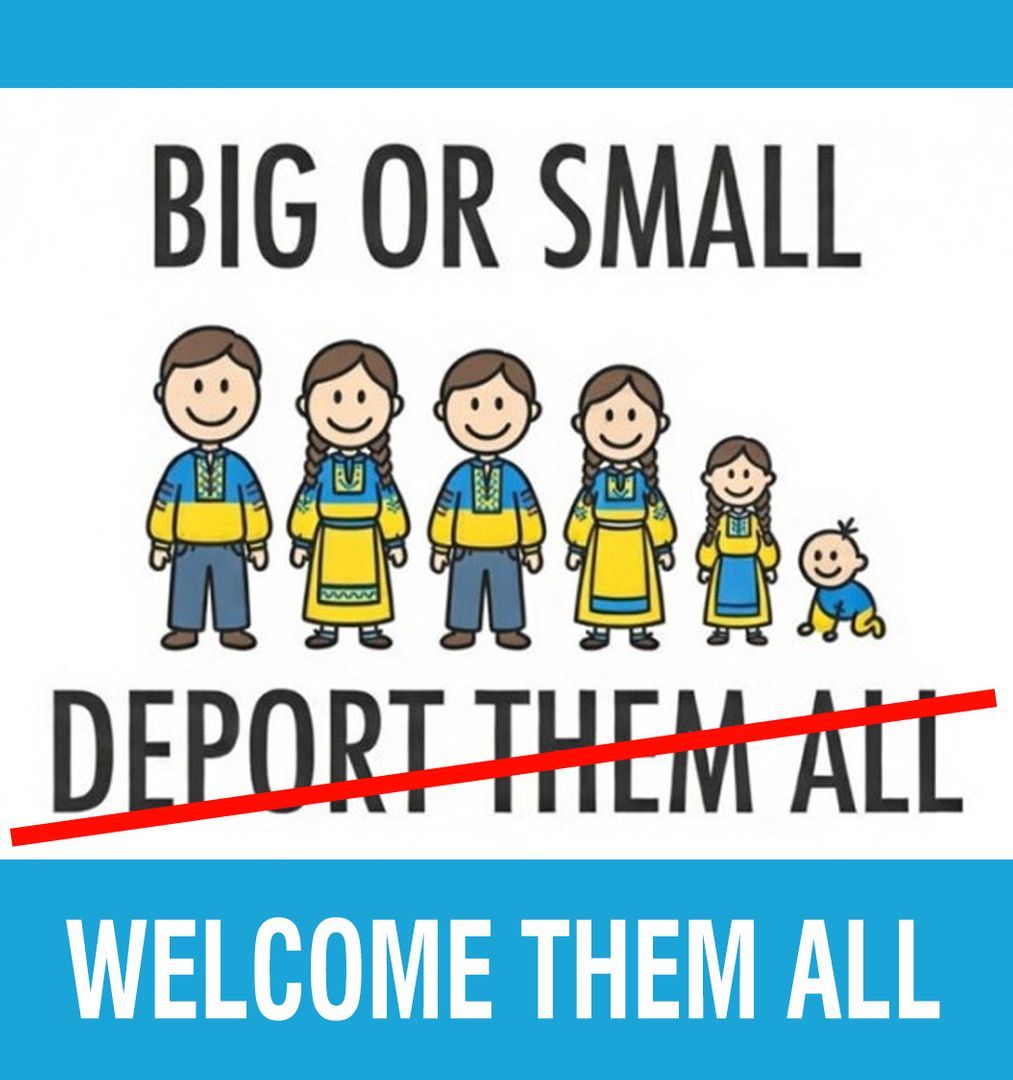
‘This Is a Polish Bench’. A report on xenophobic hostility towards children and young people
Autor/źródło: ‘NEVER AGAIN’ AssociationThe REPORT has been sent to the Office of the Ombudsman for Children, the Office of the Commissioner for Human Rights, and the Ministry of National Education in Poland.
The 50-page report by the ‘NEVER AGAIN’ Association documents attacks targeting refugee children who have fled war, particularly those from Ukraine, as well as children from migrant families, children with darker skin tones and children with disabilities. The publication covers selected incidents that occurred between 2022 and 2026.
Among the examples of discrimination and aggression documented in the report are cases of pupils being harassed in schools on the grounds of their nationality or skin colour, discrimination in access to playgrounds or sports facilities, as well as intimidation, threats and insults directed at children and teenagers either in person or on social media. In 2026, significantly more such incidents were recorded than in previous years.
‘Violence against children is morally reprehensible, yet for far-right propagandists who spread this hatred, only their political and financial interests matter’, comments Lukasz Jakubowski, a representative of the ‘NEVER AGAIN’ Association.
Young people from 148 different countries study within Poland’s non-university education system, making up 5.3 percent of the student population. This encompasses 353,000 individuals, which includes 237,000 school pupils, 62,600 nursery school children, and 53,400 adult education learners. Among this international group, the vast majority come from Ukraine at 84 percent, followed by Belarus at 9 percent, Russia at 1 percent, and Vietnam and India at less than 1 percent each. Looking at the Polish school system as a whole, children from Ukraine alone make up 4.1 percent of all pupils.
The ‘NEVER AGAIN’ Association has been conducting anti-discrimination trainings and workshops for teachers, youth workers and students for several years. Participants learn how to recognise racism and xenophobia, including hate symbols used by neo-fascist groups and shared in online spaces. They also learn how to respond to prejudice and how to support people who experience discrimination.
Furthermore, since 2020, the ‘NEVER AGAIN’ Association has been involved in an online educational initiative under the title Watch Out, run in collaboration with the Forward Foundation. The project’s website features lectures by experts in history, sociology and social psychology, lesson plans for history, social studies and form time sessions, as well as teaching materials for use in English classes. More information about the Watch Out project:
https://www.nigdywiecej.org/en/our-news/183-articles-from-2020/4442-watch-out-a-new-anti-fascist-educational-initiative-online
The ‘NEVER AGAIN’ Association is an independent anti-racist organisation founded in Warsaw in 1996. In recent years, it has published, amongst other things, a report entitled ‘Let’s Maintain Solidarity with Refugees’ on cases of discrimination and hate speech against Ukrainians in Poland in the context of the ongoing war. It has also published a study on online hate speech directed at refugees from Ukraine, entitled ‘How to Count Hate: Haters on Ukrainians’. The ‘NEVER AGAIN’ Association also runs the Minorities for Peace initiative. This project supports Ukrainian refugees and anti-war dissidents from Russia who belong to ethnic minorities and Indigenous communities. ‘NEVER AGAIN’ cooperates with the European Network for Solidarity with Ukraine (ENSU).
Examples of incidents described in the ‘NEVER AGAIN’ Association’s report:
WARSAW. On 2 September 2022, a group of aggressive men and a woman hurled xenophobic insults at a group of young people from Ukraine. They prevented them from using the pitch where the Ukrainians were playing football with Poles and Belarusians. The attackers shouted, ‘This is a Polish school! Not Ukrainian! Get the f*ck out of here!’
LUBLIN. On 7 January 2023, two men assaulted a Ukrainian woman, her 13-year-old son and her adult pregnant daughter. When the attackers heard that the family was talking in Ukrainian, they shouted insults, ‘Ukrainian wh_res’, ‘F_ck Ukrainians’ and ‘Get the hell out of Poland’. When the boy tried to call the police, they pushed him to the ground and punched him in the head. They also assaulted the pregnant woman, despite her shouting that she was pregnant.
BIELSKO-BIALA. On 31 August 2023, at one of the town’s football pitches in Komorowice district, a group of teenagers brutally beat up two brothers, refugees who had been evacuated from Afghanistan with their parents.
WARSAW. On 7 June 2024, Member of Polish Parliament Grzegorz Placzek from the far-right Confederation party posted a video on TikTok in which he spread false claims that Ukrainian children were receiving preferential access to haemophilia treatment.
SZCZECIN. On 1 August 2025, a Facebook user incited violence against people with disabilities and made threats against a girl with Down syndrome. The man called for the child ‘to be thrown into the river’ and referred to people with disabilities as ‘subhumans’. He wrote that the ‘defective thing’ should be ‘f*cking tossed into the Vistula River’ and sent to the ‘gas chambers’.
OSTROW MAZOWIECKA. On 25 September 2025, on a housing estate a local resident assaulted an 11-year-old dark-skinned boy. He hurled racist abuse at him and kicked him twice.
WARSAW. On 27 October 2025, a post appeared on the Twitter/X account of Korona Warszawa (Warsaw branch of the far-right party Confederation of the Polish Crown) condemning the medical aid provided by the Polish government to children in Ukraine.
SLUPSK. On 17 November 2025, several students of the Building Construction School attacked four Ukrainian teenagers from the private School of Crafts in Slupsk. As the Ukrainian students were walking to a bus stop, a group of Polish students followed them, shouting ‘Ukrainian wh_res’ and ‘F_ck Ukraine’. One boy suffered a broken collarbone, while another was suspected of having a concussion. On the day of the attack and in the preceding weeks, a teacher at the school had made contemptuous and xenophobic remarks about Ukrainian students.
POZNAN. On 15 July 2026, Prof. Stanislaw Zerko, an employee of the Institute for Western Affairs, a state research centre, published a series of shocking posts on Twitter/X mocking the tragic fate of refugee children. He used a photograph of Alan Kurdi, a three-year-old Syrian refugee who drowned in 2015. The photo of the child’s body lying on a beach shocked public opinion around the world at that time and became a symbol of the humanitarian crisis Zerko mockingly captioned the image, ‘I was so moved, my eyes filled with mustard’.
LEGNICA. On 18 July 2026, 26-year-old Karolina O. attacked a group of six 13- and 14-year-old girls from Ukraine in a playground. The mother of two of the affected children described the incident, ‘A woman approached them with her two daughters and told them, «You are in Poland, speak Polish». She punched one of my daughters’ friends in the neck with her fist. The girl fell to the ground. At the same moment, my daughter was punched in the face. […] A moment later, a Ukrainian boy approached, wanting to defend the children. He was also hit and suffered a broken nose’.
LODZ. On 3 August 2026, a video documenting an attack on a Ukrainian teenager by an unknown man was posted on Facebook. At a tram stop, the aggressor hurled nationality-based abuse at the teenager. He shouted, ‘F_ck Ukraine! F_ck you, c_nts! You’re in my country, Poland. And why aren’t you at war and fighting? You could have been fighting for your country, you c_nt!’
BYDGOSZCZ. On 14 August 2026, a woman and a man attacked two Ukrainian siblings: a 14-year-old girl and her 12-year-old brother. The incident was reported by the Consulate General of Ukraine in Gdansk, ‘Two Ukrainian minors […] were subjected to aggression by adults solely because they were speaking Ukrainian to each other. The attackers also resorted to physical violence’.
‘This Is a Polish Bench’. A report on xenophobic hostility towards children and young people (full version available as a PDF)
Report ‘Let’s Maintain Solidarity with Refugees’ (full version available as a PDF)
'NEVER AGAIN' Association, logo
Autor/źródło: 'NEVER AGAIN' AssociationŹródło: Stowarzyszenie "Nigdy Więcej"
Dodaj informację do portalu ngo.pl!
Czekamy na Twój artykuł, komentarz, wywiad czy relację. Dotrzyj ze swoją informacją do tysięcy osób, które czytają ngo.pl.
-
Stowarzyszenie Nowoczesnej Edukacji Prawnej
-
Ela Bajda, Stowarzyszenie Miłosierdzia św. Wincentego à Paulo w Sopocie
-
Dorota Setniewska, ngo.pl
-
Justyna Dziuma